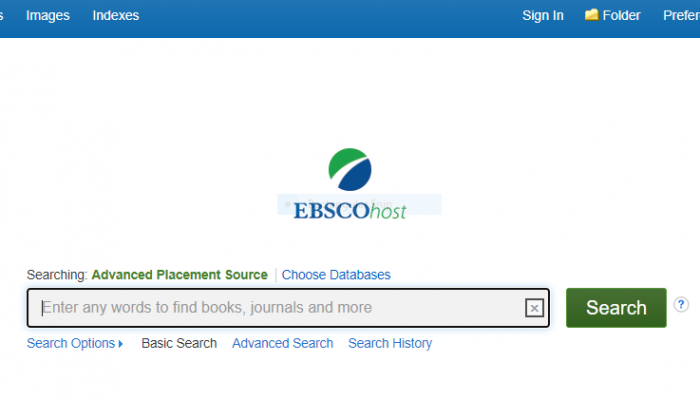
Today we’re going to look at the best database, (Advanced Placement Source) within the TDSB’s Virtual Libraryfor your peer-reviewed articles.
Remember that the databases are password-protected and some of the passwords have changed since last year. You will need to be logged into AW to access these resources. Look for the orange Passwords & Info icon in the Virtual Library.
You’ll see this at the top of the Virtual Library page.
We will also review APA referencing as you will need to cite your source for your article. Please reference the following document for examples, specifically on page 2.
Mr. Oster has provided explicit instructions regarding the formatting of tables and graphs on your handout. OWL Purdue is also another good source for reference help, if necessary.
Today, we’ll be discussing APA citation and looking at the use of databases.
APA Citation This form of citation helps students show the source of their research and is quite simple to accomplish. We’ll talk about how we write a References list together in class and talk about why it’s important to know how to do it properly.
You can download our APA Primer in PDF form Here, or view it below in your browser’s PDF viewer.
The Library Catalogue provides you with remote access to our digital and streaming media collection. It also allows you to search the print collection to see what books will be available for circulation.
Other sources are easily accessed in the Virtual Library under the yellow FIND tile, such as Teen Health and Wellness. Remember to choose Grades 9-12, All Resources and Health and PE for this assignment.
We’ll also discuss how to use our Academic Databases and how to find passwords if you’re working virtually.
Remember to keep track of any sites that you use so that you can format your References list easily.
Good morning I.B. Biology fans, today you’ll be working in the Library and learning about how to find reputable scientific articles as well as how to cite them using APA.
Today we’re going to look at the best database, (Advanced Placement Source) within the TDSB’s Virtual Libraryfor your peer-reviewed articles.
Remember that the databases are password-protected and some of the passwords have changed since last year. You will need to be logged into AW to access these resources. Look for the orange Passwords & Info icon in the Virtual Library.
You’ll see this at the top of the Virtual Library page.
We will also review APA referencing as you will need to cite your source for your article. Please reference the following document for examples, specifically on page 2.
Your task is to find a current news article has legal significance, either domestic (Canadian) or international and that falls under any governing body.
Besides referring to newpapers, have a look at the following links for current events:
You will need to reference your article in the proper format and the following links explain what that should look like in terms of footnoting and bibliography.
Researching using news sources can be done through the Virtual Library as well as using Google. (Remember to keep track of where you found your information so that formatting your Works Cited list will be a breeze!)
It is crucial to properly reference information that is not your own in order to give credit where it’s due and also to avoid PLAGIARISM. Providing your teacher with a URL for a website used unfortunately will not cut it anymore
Using the following information will put you on the right track to creating a Works Cited list to be proud of!
Below you’ll find the Laurier Guide for MLA Citation.
Have a look at this video for help with parenthetically embedding citations within the body of your work.
Remember to look to OWL @ Purdue for other questions that arise about citation. It’s where Mr. Kososwan, Ms. Vilicic and Ms. Syniura go when we’re looking for information about citation.
APA Citation This form of citation helps students show the source of their research and is quite simple to accomplish. We’ll talk about how we write a References list together in class and talk about why its important to know how to do properly.
You can download our APA Primer in PDF form Here, or view it below in your browser’s PDF viewer.
The AP Source found HERE provides students with excellent peer-reviewed journals with tools to help organize and cite research. It’s the most powerful database we have.
The Library Catalogue provides you with remote access to our digital and streaming media collection. It also allows you to search the print collection to see what books will be available for circulation.
We’ll also discuss how to use our Academic Databases and how to find passwords if working virtually.
Remember that the databases are password-protected and some of the passwords have changed since last year. You will need to be logged into AW to access these resources. Look for the orange Passwords & Info icon in the Virtual Library.
You’ll see this at the top of the Virtual Library page.
Slide Presentation and Citing Images
Your slide presentation needs visuals which in turn need to be cited in APA. In this situation you need to reference the source of the visual and unfortunately stating Google Images as the source will not suffice.
Simply put, you may NOT cite Google. It is a search engine, not a source. You have to dig deeper to cite images that are found through Google.
Here are a couple of short videos that may help you in this process, both of which I have permission to share with you.
The first one is valuable in that it shows where to find images that are free to be used in Google.
The second one shows how to cite images that may or may not have all of the information that you need.
These videos give slightly different information in terms of the placement of the date. The first video shows the date placed immediately after the creator’s name and no mention of the type of image.
The second video shows the creator’s name, the type of work and then the date.
Which one is accurate? The main difference is that the creator’s role (photographer) is mentioned in the second video as well as the type of image [photograph].
Note: if the image does not have a title, describe the image and put that description in square brackets.
Brock University and Simon Fraser University also have included great examples of citing images that you can reference as well.
From Brock U. 7.2: Using Images on Slides
If you use images, such as photographs or clipart, on your slides, you should also credit the source of the image. Do not reproduce images without permission. There are sources for clipart and images that are “public use” according to Creative Commons licensing such as:
Photographs are treated as figures in APA Style. Therefore, the citation for the source of the image is included as a footnote in the figure caption underneath the photograph which includes the figure number and a description. The source of the image obtained is attributed using the following model:
Figure 1. Blah blah blah. From Title of Image, by Author, Year. Retrieved from URL.
Another option for citing image sources is to create a separate slide titled “Photo credits” or “Image Sources”. For more assistance on the various ways to cite images in presentations (but not necessarily in APA format), see:
How to credit photos (Photoshare.org). Provides examples of various ways to credit image sources in Powerpoint, on webpages, and in print materials.
For more assistance in creating figures in APA Style, see the following sections & pages of the Publication Manual, 6th edition:
2.12 Footnotes (pages 37 -38)
5.20 – 5.25 Figures (pages 150 – 167)
Now that you know what you’re looking for, there are lots of places to look for images or illustrations for this assignment that are covered by Creative Common licenses which means that you can share and edit the material as long as you give appropriate credit.
Welcome Mr. Woodley’s Grade 10 History class! Today begins our series of classes in the quest to creating an outstanding history research essay.
For research purposes, we’ll base our start in the Virtual Library. (Remember that many databases are password-protected from home).
The Library Catalogue allows you remote access to our print, digital and streaming resources from anywhere at any time. To access this resource, you’ll simply need your TDSB log-in information.
The Canadian Encyclopedia is an excellent source of information for Canadian individuals (or for those with ties to Canada).
The History databases and websites within the Virtual Library may be helpful. Just remember to choose Grade 9-12 and History as the Subject in the yellow FIND tile.
Our second discussion will revolve around embedding quotes within your essay which follows MLA school of citation.
In English classes you may have cited novels or short stories or poems parenthetically using MLA, which involves the author and page number from the text.
For Mr. Woodley’s class many of your sources will be online so that changes things a little bit.
To embed quotes, there are a few simple guidelines to remember:
Finally, when in doubt, OWL Purdue is a great resource for all of your citation needs.
Remember that you will need to include a Works Cited page using MLA school of Citation. It is crucial to properly reference information that is not your own in order to give credit where it’s due and also to avoid PLAGIARISM. Providing your teacher with a URL for a website used unfortunately will not cut it anymore.
Using the following information will put you on the right track to creating a Works Cited page to be proud of!
Below you’ll find the Laurier Guide for MLA Citation.
Ms. Magson’s Grade 11 Introduction to Anthropology, Psychology, and Sociology class will be coming to the Virtual Library to research their Mental Illness Case File assignment.
For this assignment, you’ll need quality resources from different areas.
Resources for HSP
To access media resources, use our Catalogue; found on the Virtual Library. The Catalogue provides you access to streaming video and other digital resources. You’ll need to log in with your TDSB information to access the Catalogue as well as use the digital learnmark for passwords to Learn360 and CBC Curio. (see note in red below)
To access a reliable database such as Advanced Placement Source, you’ll need to go through the Virtual Library, click on the yellow FIND button, choose Grades 9-12 and it will be the first entry you see. It is Password Protected. The login and passwords for EBSCO databases like AP Source and Global Issues in Context are listed on the digital learnmark accessible on the home page of the Virtual Library in the top right corner.
Teen Health and Wellness is another good starting point, accessible through the Virtual Library and password-protected from home.
External links that may behelpful:
A valuable resource is the Vanier Institute of the Family, which has excellent research on mental health and its impact upon families. Use the Search feature to find information on your illness/disorder.
There are websites and organizations specific to some illnesses such as Tourette’s Syndrome so that may be an option to look into as you are researching.
Period 1 – Ms. Papoutsis’ CGC1D (Grade 9 Geography)
Greetings geographers and welcome to the Library.
Today, you’re looking at Landforms, which you’ll need to use Laurier’s Virtual Library to research.
Luckily, your teacher has given you the URLs needed on the handouts; so that’s pretty easy to navigate!
Our focus together, that’ll be upon discussing APA citation.
This form of citation helps students show the source of their research and is quite simple to accomplish. We’ll talk about how we write a References list together.
Today you’re here to do some research connected to your novel.
One great database is Global Issues in Context, found in the Virtual Library. It is password-protected when you’re at home so make sure you know where to find them in the Virtual Library. (Hint: look for the Orange Passwords Icon)
An external source that provides a good, neutral overview of countries and their history, political situations, etc is the CIA World Factbook.
As a reminder, it’s a good idea to keep track of your information and the sites you use so that you are easily able to format your Works Cited page in MLA.